

Hey! I’m Emma from Where’s Ems? 👋🏼 I’ve been travelling full-time since 2023 while building my freelance writing business. Join to receive my monthly roundups: a behind-the-scenes look at where I’ve been, what I’ve loved and learnt, complete with my spending diary and income breakdown.
If this series isn’t for you, that’s totally fine. You can update your preferences and pick what you want to hear about here.

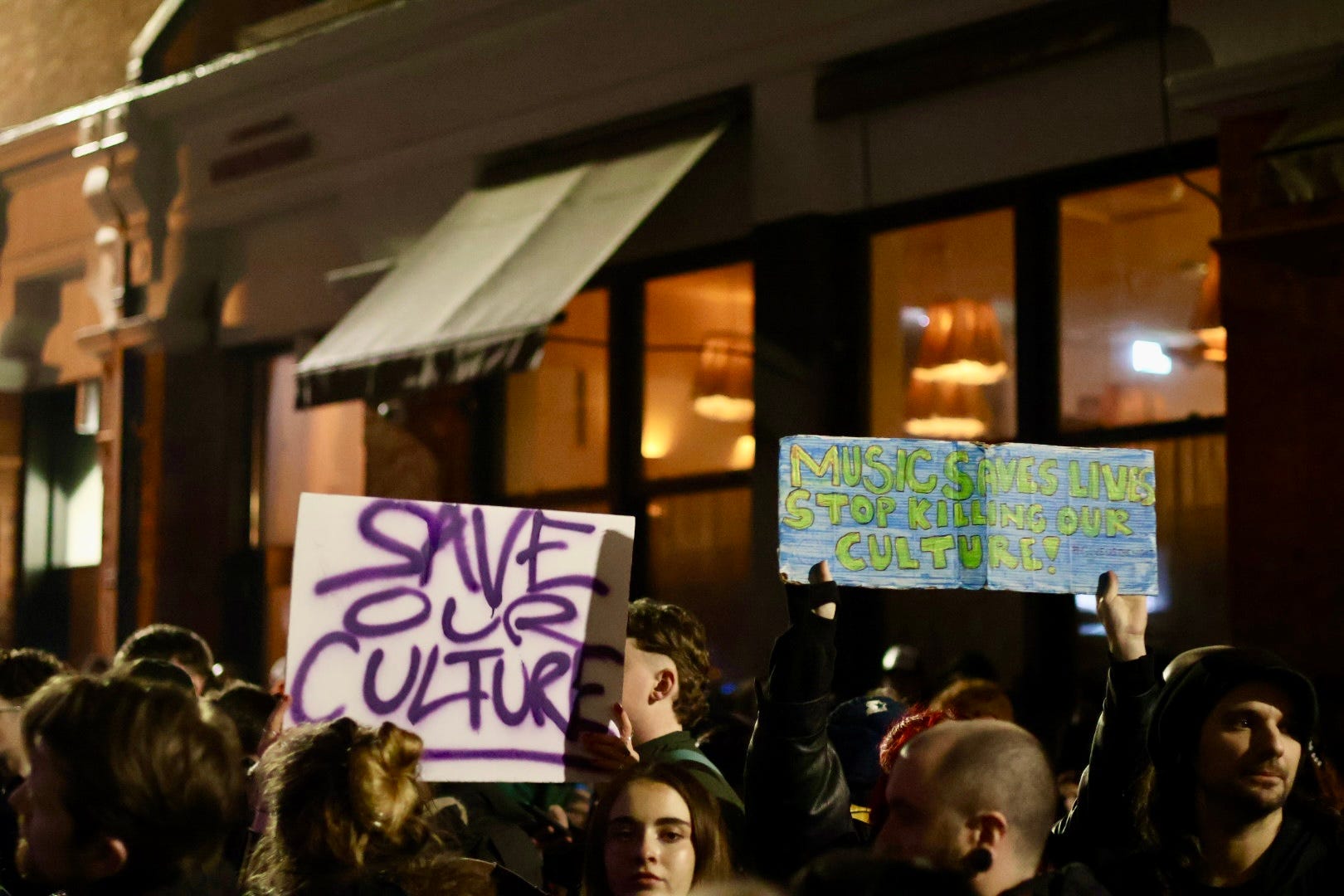
A man buttons up his white shirt in his hotel room, moving to the rhythm of the bass pumping from the street below. Through the sheer curtains, protesters spot him at the window and cheer, hoisting their signs a little higher. He raises his arms to the ceiling as if surrendering to the music and laughs, perhaps unaware that their protest is against the very building that’s housing him.
The crowd outside The Hoxton Dublin are there because the newly opened hotel is taking legal action against its long-standing neighbour, Yamamori Izakaya, over a noise dispute. Family-run Izakaya has been part of this street for years, known for its DJs and late-night events. The protesters’ message is simple: a hotel that arrived months ago should not be able to use the courts to restrict a venue that has long been part of Dublin’s nightlife.
For many Dubliners, this is about more than one injunction. In 2021, demolition plans linked to a hotel development threatened The Cobblestone, a cornerstone of traditional Irish music, until public outrage forced the application to be withdrawn. In January this year, The Complex, a creative arts space that had operated for 18 years, closed permanently after its landlord sought vacant possession to maximise redevelopment value.
The motive, each time, is the same: money.
Music, art and storytelling are central to Ireland’s identity. These spaces are not a luxury. They are part of how people cope, connect and belong. They’re where communities are built and friendships formed. People go to switch off. To laugh. To learn. To create.
I cannot begin to explain how much I love Dublin’s trad music scene. The flutes and fiddles. The swell of uilleann pipes. Boots tapping against worn wooden floors. Everyone leaning in, listening, usually with a pint of Guinness in hand. As a writer and traveller, I spend my life searching for places that feel truly alive. Dublin has always given me that. I’m not ready to watch it disappear in the name of profit. So I joined the protest.
I also had some freelance friends come to visit for a long weekend, which rarely happens. The weather was mostly wet, so all we could really do was shelter in pubs. Such a shame ;)


I have a couple of conversations going on in the community that you may like to contribute to:
Also in this issue:
Dublin recommendations
A documentary you might like
How much I spent living in Dublin for a month
How much I made on Substack in February (+ other freelance income)
… and more!
Enjoy!

🌎 Where I went…
28 nights house sitting in Dublin, Ireland.
🌟 What I loved…
It rained almost every day in Dublin, which meant I became very lazy. In an effort to do something vaguely active, I went looking for a spin class. I absolutely hate spinning, but I do love how good I feel afterwards. I’d completely forgotten ClassPass existed, and when I went to sign up again, they gave me around 30 credits to use for free. I like that it pulls together nearby classes in one app, especially handy when you’re travelling and don’t have a local gym.
My house sitting host was desperate for me to go to John Kavanagh’s The Gravediggers, which has been part of Dublin since 1833. It's a good old Irish pub that serves up a delicious tapas menu, but it’s probably not a place you’d stumble upon. There’s no music here, which means it’s a great place to actually have a conversation with friends or locals.
Did you know Airbnb also run Experiences? I’ve done this Real Dublin Traditional Music Pub Tour twice now and would really recommend it. You visit three trad sessions with a local musician and a small group, learning a bit about the history between pubs. It also includes half a Guinness (or another drink) at each stop.
If you’re interested in the issues I mentioned in the introduction, it’s worth watching this heartwarming documentary about The Cobblestone and the community effort to protect it. It gives real insight into what the pub has been through and why places like it matter so much.
A VPN (Virtual Private Network) encrypts your internet connection and lets you browse as if you’re in a different country. When you’re travelling, that means you can still access the streaming services you’d normally use at home. NordVPN is the best one I’ve used. When I’ve tried cheaper options, they haven’t worked as reliably and streaming sites have quickly picked up that I’m not actually where I claim to be. Last month, determined not to miss the series finale of The Traitors, I switched back to Nord and watched it on BBC iPlayer without any issues. Crisis averted.
💸 What I spent…
If you don’t already track your expenses, I highly recommend giving it a go. I’ve been paying for everything in Euros this month, which always makes things feel more expensive, so I was sure I’d spent a small fortune. I was pleasantly surprised to come in at under £800 total, and that’s during a fairly spendy month of eating and drinking. Here’s the breakdown: